
Hotelier's Digest #7: AI discovery, resilient demand, and smarter staffing

This week’s strongest signals point to a tighter link between commercial visibility and operational discipline. Hotels are being forced to rethink how they show up in AI-driven discovery, not just how they rank in traditional search. At the same time, first-quarter earnings from major brands suggest demand remains resilient enough to support measured optimism, especially when operators protect margin instead of chasing volume blindly. On property, labor planning is becoming less of a scheduling exercise and more of a profit lever. The common thread is control. Hotels that get cleaner data, better channel discipline, and more responsive staffing in place will be in a stronger position than those still treating these functions as separate workstreams.


Featured Analysis
“Hotels must move from optimizing for clicks to optimizing to be the answer guests are looking for.”
— Amy Read, vice president of innovation at Aven Hospitality, via LODGING
In LODGING’s interview on AI-driven hotel discovery, the important shift is not simply that AI search is growing. It is that AI changes what counts as competitive advantage in distribution. Traditional hotel digital strategy has often treated visibility as a mix of paid media, SEO tactics, and OTA participation. Amy Read’s framing suggests a deeper operational change: the hotels that surface effectively in AI-assisted planning will be the ones with the cleanest, most structured, most trustworthy data.
 Colin Tessier
That matters because AI does not browse the way humans do. It selects from what it can interpret confidently. If a hotel’s content, policies, rates, and availability are fragmented across systems, AI will often default to intermediary sources that are easier to read, even when they are less complete. That puts direct-booking ambitions at risk.
For hotel teams, the near-term implication is practical rather than theoretical. AI readiness is becoming a core commercial discipline. Distribution strategy, reservation architecture, and content governance are starting to converge. The properties that treat structured data as infrastructure rather than marketing hygiene will have a better chance of protecting margin, guest relationships, and direct demand as AI search matures.
Revenue and Commercial Strategy
“Marriott International posted RevPAR growth and financial results ‘above the top end of our guidance ranges’ in the first quarter of 2026.”
— Hotel Dive, summarizing Marriott’s Q1 results
Marriott’s latest earnings update offers a useful counterweight to blanket caution in the market. Worldwide RevPAR grew 4.2 percent year over year in Q1, and the company raised its full-year 2026 systemwide RevPAR growth outlook to 2 to 3 percent. That does not mean every market is easy. It does suggest that disciplined operators still have room to defend rate and invest selectively.
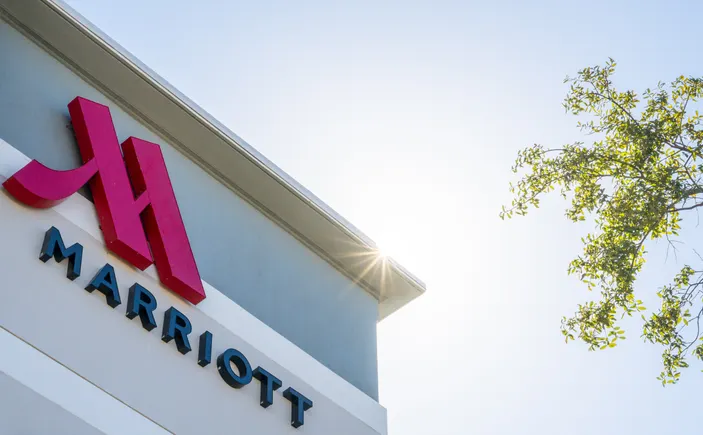
The more interesting detail is how Marriott linked performance to development and technology. Conversions represented more than 35 percent of signings and more than 40 percent of openings, while leadership also highlighted AI-enabled search and service improvements. In other words, growth is not being framed as demand alone. It is being framed as a combination of portfolio positioning, distribution strength, and operational leverage.
Data Point of the Week: Marriott reported 4.2% worldwide RevPAR growth in Q1 and raised its full-year systemwide RevPAR outlook to 2%–3%.
Operations and Leadership Insight
“Forecasting becomes far more than a retrospective check on performance; it becomes an essential mechanism for shaping staffing decisions before costs are locked in.”
— John Lockyer, via LODGING
In LODGING’s piece on workforce planning, the most useful point is that labor strategy should be treated as a forward-looking profit tool, not an after-the-fact reporting exercise. The article argues that when demand spikes around events, weather shifts, or irregular travel patterns, static schedules break quickly. Managers then compensate with overtime, reactive shift changes, and service compromises.
John Lockyer
That framing is worth paying attention to because many hotels still separate forecasting from labor execution. If revenue pressure remains real and room-rate growth stays modest, margin protection will depend as much on staffing precision as on pricing discipline. Better demand intelligence does not just help avoid chaos on the floor. It improves fairness for teams, reduces burnout risk, and preserves service consistency when occupancy patterns stop behaving normally.
For operators, the practical takeaway is simple: connect demand signals to staffing decisions earlier, and treat labor planning as part of commercial strategy rather than a back-office clean-up task.

Media Recommendation
Why Growth Marketing Matters More Than Ever for Hotels With Emanuel Moura is a strong listen for teams trying to connect marketing spend to actual hotel economics. Moura’s argument is that growth should be managed as a system, not as disconnected campaigns across paid media, SEO, email, and analytics. That is useful because many hotels still split those functions across vendors and then struggle to see what is actually driving direct bookings. The episode becomes especially relevant when Moura ties acquisition decisions back to revenue management pace. For independent and boutique operators, it is a practical reminder that margin protection often starts with better attribution and tighter coordination, not bigger budgets.


Destination or Hotel Spotlight
Park Hyatt Tokyo Tokyo, Japan
AFAR’s in-depth review of the renovated Park Hyatt Tokyo is compelling not just because of the property’s history, but because it shows how a legacy luxury hotel can refresh itself without losing the traits that made it matter in the first place. The review emphasizes the hotel’s unusually large rooms, residential atmosphere, and food-and-beverage relevance with local Tokyoites even after a 19-month renovation.
 https://www.afar.com/authors/yukari-sakamoto
That is strategically interesting because many luxury repositionings overcorrect toward novelty. Park Hyatt Tokyo appears to have taken the opposite route. The renovation updates comfort, craftsmanship, and functionality while preserving the calm, place-specific character that gave the property cultural weight. For hoteliers, the lesson is broader than one iconic asset. Renovation value often comes less from reinvention than from clarifying what the property already owns in the market, then modernizing around it with discipline.
Closing Reflection
What ties this edition together is the idea that better performance is increasingly won through alignment. Hotels need structured data that AI can trust, demand strategies that protect rate without drifting into blunt discounting, and staffing systems that respond to volatility before labor costs harden. None of those are separate problems anymore. They are connected operating decisions. The hotels that do best over the next year will probably not be the ones chasing every new tool. They will be the ones building cleaner systems, making calmer decisions, and executing with less friction across commercial and operational teams.